Industrial Vending Machines Are Evolving into Smart Inventory Management Systems
Gone are the days when an industrial vending machine was merely a modified snack dispenser filled with safety gloves and drill bits. Today, these systems sit at the forefront of digital transformation on the factory floor, evolving into comprehensive, interconnected smart inventory management systems that drive operational excellence.
RFID and Smart Locker Technology
Modern vending systems utilize advanced RFID (Radio Frequency Identification) and weight-sensing smart lockers to offer unprecedented control. Instead of relying on manual check-outs, workers authenticate via badges or biometrics, grab what they need, and the system automatically registers the exact items removed. This zero-friction approach ensures 100% accountability for high-value assets and calibrated tools without slowing down the workflow.
Seamless API Integration
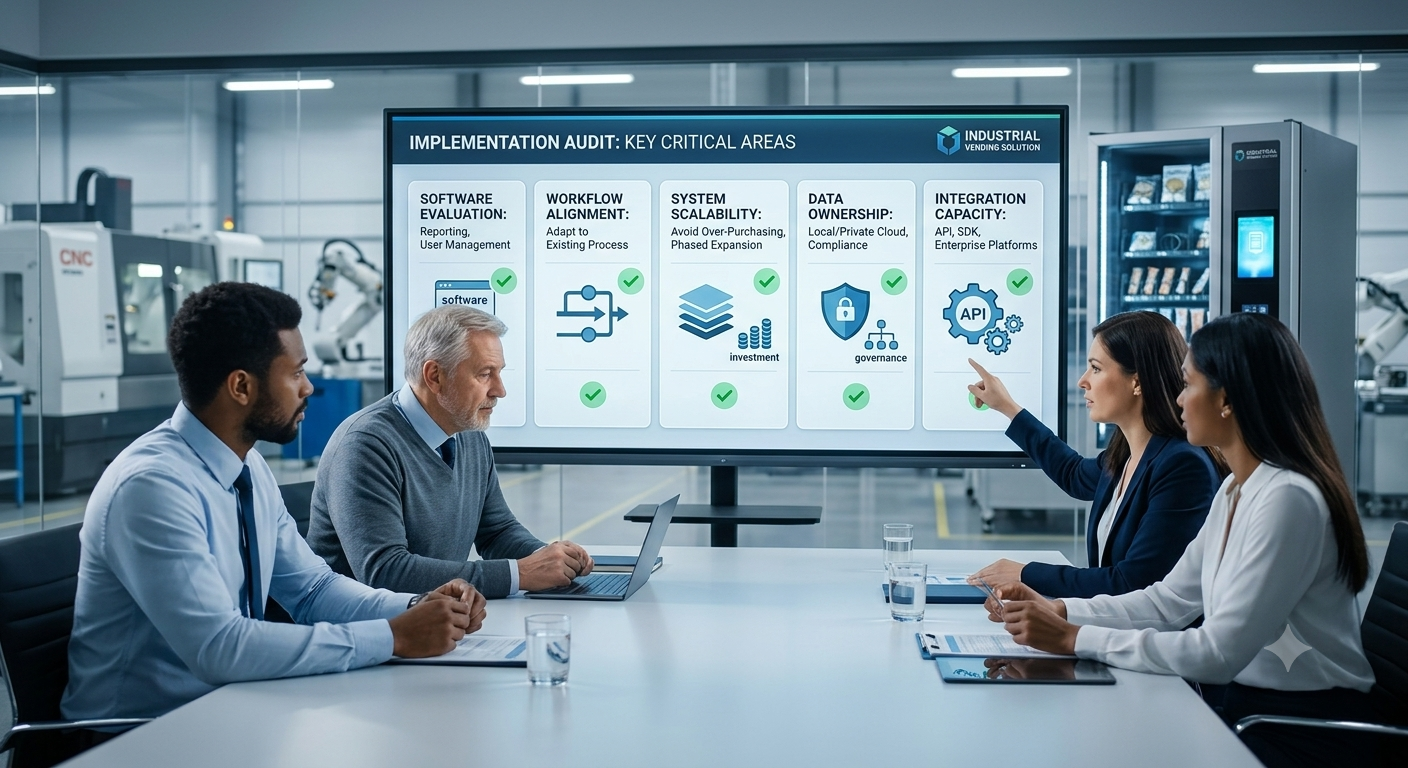
A standalone machine creates a data silo. Smart inventory management systems solve this through robust API integrations that feed real-time data directly into your ERP (Enterprise Resource Planning) and CMMS (Computerized Maintenance Management System). This allows for automated purchase orders, cost-center allocation, and unified reporting across multiple facilities, drastically reducing administrative overhead.
Real-Time Inventory Tracking
Cloud-based dashboards provide visibility into inventory levels 24/7 from any device. Managers can track usage rates, identify hoarding behaviors, and monitor stockouts before they disrupt production. Real-time data translates to actionable intelligence, allowing procurement teams to optimize min/max levels based on actual consumption rather than estimates.
Automated Material Control Benefits
By enforcing automated permission rules (e.g., limiting a user to 2 pairs of gloves per shift), smart systems actively prevent waste. Furthermore, they streamline tool returns, maintenance scheduling for calibrated equipment, and regrind processes. This level of granular control is crucial for maintaining compliance and minimizing total cost of ownership (TCO) for indirect materials.
Implementation Best Practices
- • Conduct a thorough audit of current MRO spend.
- • Map out user permissions before deployment.
- • Start with high-value or high-turnover items.
- • Ensure IT aligns on data security and integration.
- • Provide comprehensive floor-level training.
ROI & Cost Savings
- • 20-30% reduction in overall tool consumption.
- • Complete elimination of stockout-related downtime.
- • Significant reduction in procurement administration time.
- • 24/7 availability without staffing a tool crib.
- • Immediate identification of obsolete inventory.
Future Trends: AI & Predictive Analytics
The next frontier in industrial vending is artificial intelligence. Future iterations will utilize predictive analytics to anticipate tool usage based on production schedules and historical trends, automatically adjusting inventory levels dynamically. As Industry 4.0 matures, the vending machine will continue its transformation from a passive storage unit to an active, intelligent node in the smart factory ecosystem.