November 11, 2026
Industrial Vending Hardware Integration: Why Software Ownership Matters
Should industrial vending software be developed by the hardware manufacturer or the system integrator? Explore three integration approaches and discover how JIEMA supports software-driven VMI projects.
Industrial Vending Is Becoming a Software-Driven Business
Industrial vending machines are no longer evaluated solely by storage capacity or dispensing mechanisms.
For industrial distributors, VMI solution providers, and OEM partners, software plays an important role in managing employee access, inventory transactions, replenishment workflows, and operational reporting.
Many companies already operate their own inventory management platforms. For these businesses, introducing industrial vending hardware should not necessarily require replacing their existing software.
This makes software ownership and integration flexibility important considerations when choosing a vending hardware partner.
Why Software Ownership Matters
Different organizations have different software requirements.
A VMI software company may want to maintain control over its user interface, inventory database, customer relationships, and future software development.
An industrial distributor may prefer to connect vending machines to an existing inventory management system.
Another customer may require a more complete solution with both hardware and software supplied by the same manufacturer.
There is no single integration model that suits every project.
The key is to establish clear responsibilities for hardware control, application development, system maintenance, and technical support.
Three Industrial Vending Integration Models
JIEMA offers three cooperation approaches for its JM-S-768e industrial vending hardware.
Mode A — Hardware + Low-Level Communication Protocol
This approach is designed for customers with their own software development capabilities.
JIEMA provides the vending hardware and applicable low-level RS-485 communication protocol.
The customer develops its own host application, user interface, inventory management functions, and business workflows.
Typical partners: VMI software companies, industrial distributors with in-house development teams, and OEM system integrators.
Mode B — Hardware + Android Application + HTTP API
Under Mode B, JIEMA provides the hardware together with an Android application and HTTP API interface according to the agreed project scope.
This approach allows the customer's external software to communicate through an application-level interface rather than directly implementing every low-level hardware command.
Typical partners: Companies seeking an intermediate software integration layer.
Mode C — Hardware + Application + Cloud Platform
Mode C provides a broader project-based solution involving the vending hardware, application software, and cloud platform.
The specific functions, customization requirements, development costs, and delivery schedule are determined during project evaluation.
Typical partners: Customers seeking a more complete vending system rather than developing their own software platform.
Hardware Flexibility Remains Essential
Software integration is only one part of an industrial vending project.
The physical equipment must also accommodate different products and operational requirements.
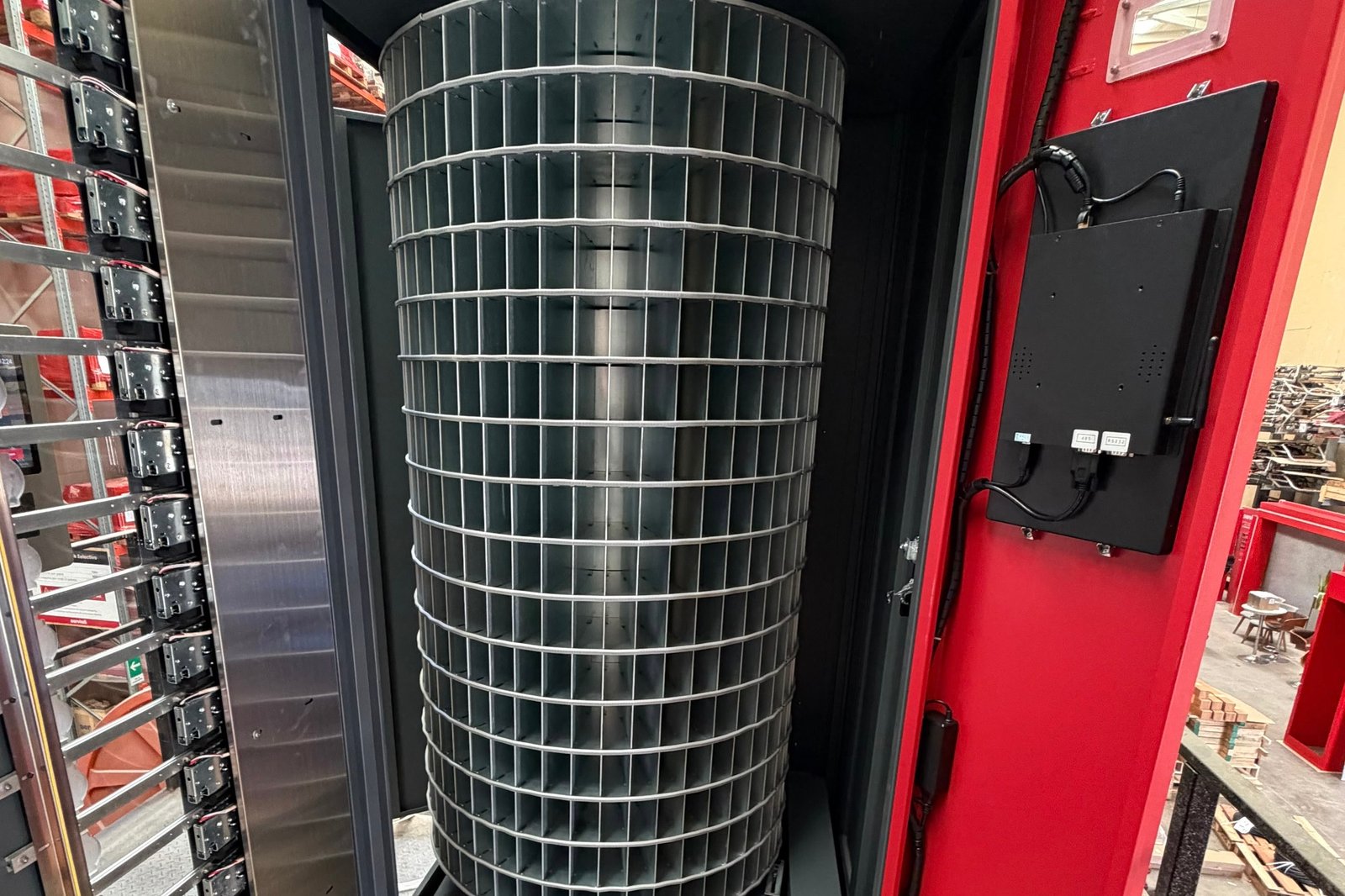
The JIEMA JM-S-768e features a rotating carousel architecture with 16 storage layers and a maximum capacity of 768 compartments.
Typical configurations include 48, 24, or 16 compartments per layer, with adjacent compartments combined to provide additional storage width.
Compartment height can be customized before manufacturing, while the finished machine's height configuration is fixed after delivery.
These options allow partners to evaluate hardware configurations for cutting tools, PPE, spare parts, and other industrial consumables.
Define the Integration Scope Before Ordering
Before selecting an integration model, customers should clarify several practical questions:
- Who will develop and maintain the user-facing application?
- Which hardware commands and status information are required?
- What identification peripherals will be used?
- Who will manage inventory records and user permissions?
- What technical documentation and integration testing are needed?
A clear agreement on these responsibilities can help reduce misunderstandings during development and deployment.
Supporting Independent VMI Solution Providers
JIEMA's JM-S rotating carousel product family has been deployed in more than 2,000 units across Mainland China, serving applications including banking, power utilities, healthcare, and manufacturing.
The JM-S-768e is one model within this product family.
For overseas software companies and system integrators, JIEMA aims to provide a configurable industrial vending hardware platform that can support different software cooperation arrangements.
Whether a partner develops its own software or requires additional integration services, the appropriate approach should be determined by the project's technical and commercial requirements.
Build Your Industrial Vending Solution with JIEMA
Are you developing your own industrial vending software or expanding an existing VMI product portfolio?
Contact JIEMA to discuss the JM-S-768e hardware platform, RS-485 communication protocol, compartment configurations, and available integration models.